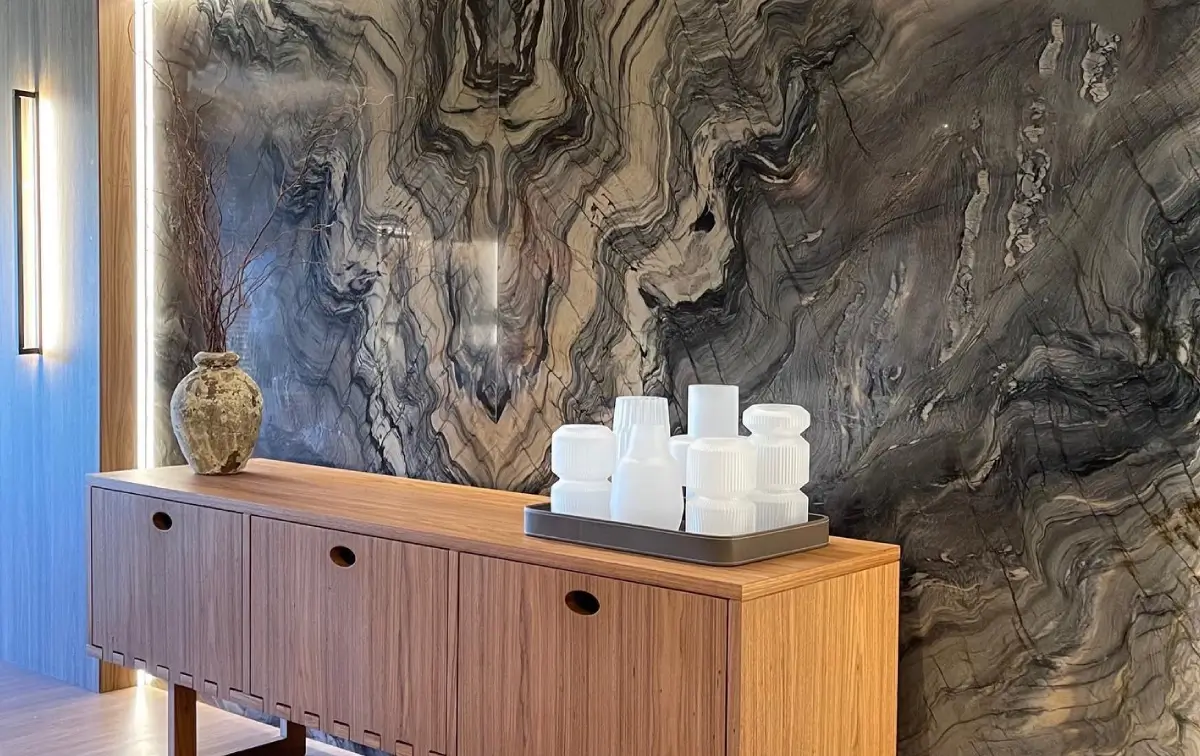
Advantages of natural stones: sustainability, biophilia and durability
Revealing themselves in different colors, shapes, textures and compositions, natural stones are unique. The synthetic coatings industry even tries, but fails to reproduce everything that makes natural stone unique and extraordinary.
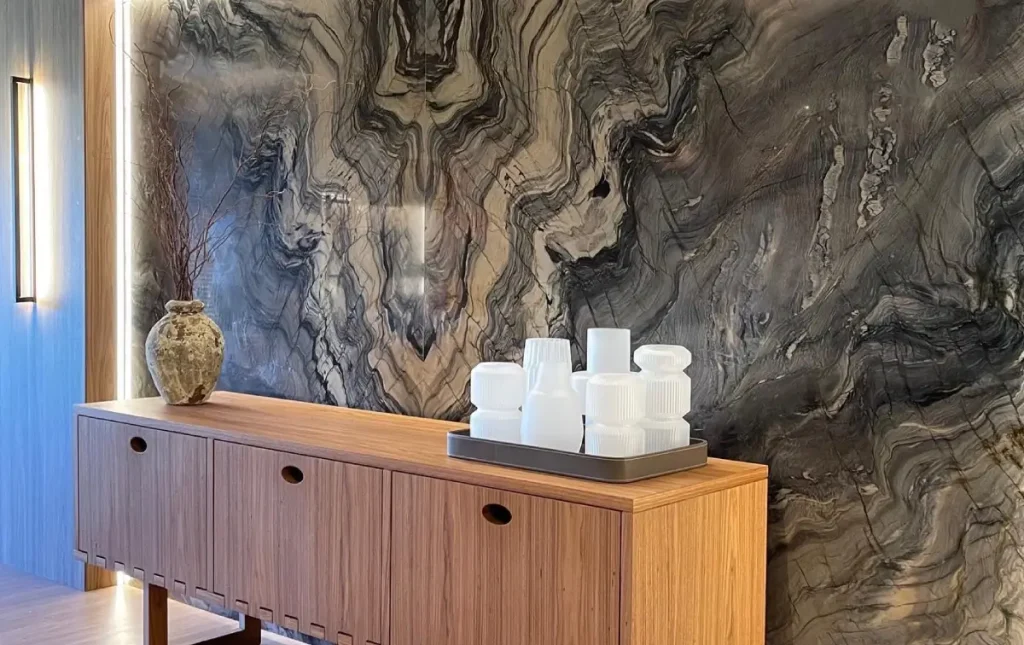
The natural materials bring in each vein and movement the history of millions and billions of years, a formation that guarantees the stones superior resistance and incomparable beauty.
Complex geological processes, as well as factors such as geographic layout, pressure, temperature, chemical composition and even volcanic activity influence how stones develop. Therefore, with each block extracted, a work of art produced by the action of nature is revealed.
A natural stone that marks the history of the world is Bronzite quartzite. Its rocky formation marks the emergence of oxygen on Planet Earth.


The variety of minerals present in a stone, for example, as well as their proportions across the surface, contribute to the unique appearance of natural stones.
As minerals form and crystallize, they can migrate and interact within the stone, creating distinctive color patterns and textures. The presence of different elements and the way they are positioned on the surface are responsible for the amazing appearance of the stones.
Brazilian geological diversity is highlighted
The geological formation of Brazil contributes to the most beautiful and different stones in the world to be found here. In a country with continental extensions, like ours, there are more than 1,200 cataloged materials. This number makes Brazil the holder of the greatest geological diversity in the world.