
Natural Stone Furniture: Design and Specification Possibilities from Marmomac Italy 2026
At Marmomac Italy 2026, held in Verona in September, the Brazilian Pavilion showcased different ways of exploring Brazilian natural stones. Among them, one stood out: stone was no longer used solely as a cladding material but began to occupy the space as furniture. Tables, benches, armchairs, stools, and decorative objects demonstrated how color, veining, thickness, […]
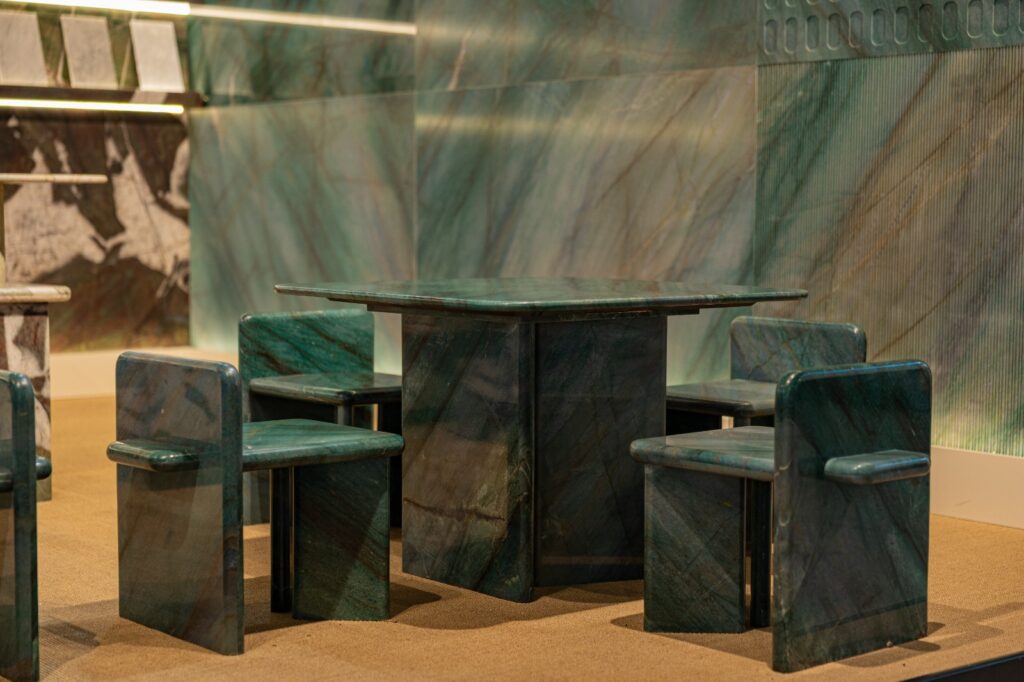
At Marmomac Italy 2026, held in Verona in September, the Brazilian Pavilion showcased different ways of exploring Brazilian natural stones. Among them, one stood out: stone was no longer used solely as a cladding material but began to occupy the space as furniture.
Tables, benches, armchairs, stools, and decorative objects demonstrated how color, veining, thickness, finish, and machining can transform stone into a three-dimensional design element.
For architects, interior designers, and specifiers, these applications expand the range of possibilities for using natural stone and encourage a more comprehensive approach to the material, from the initial concept to the detailed design of each piece of furniture.
From Slab to Furniture
Many of these pieces follow a relatively straightforward approach: slabs are transformed into tabletops, supports, and structural elements, while cutting and machining techniques define curves, joints, edges, and reliefs.
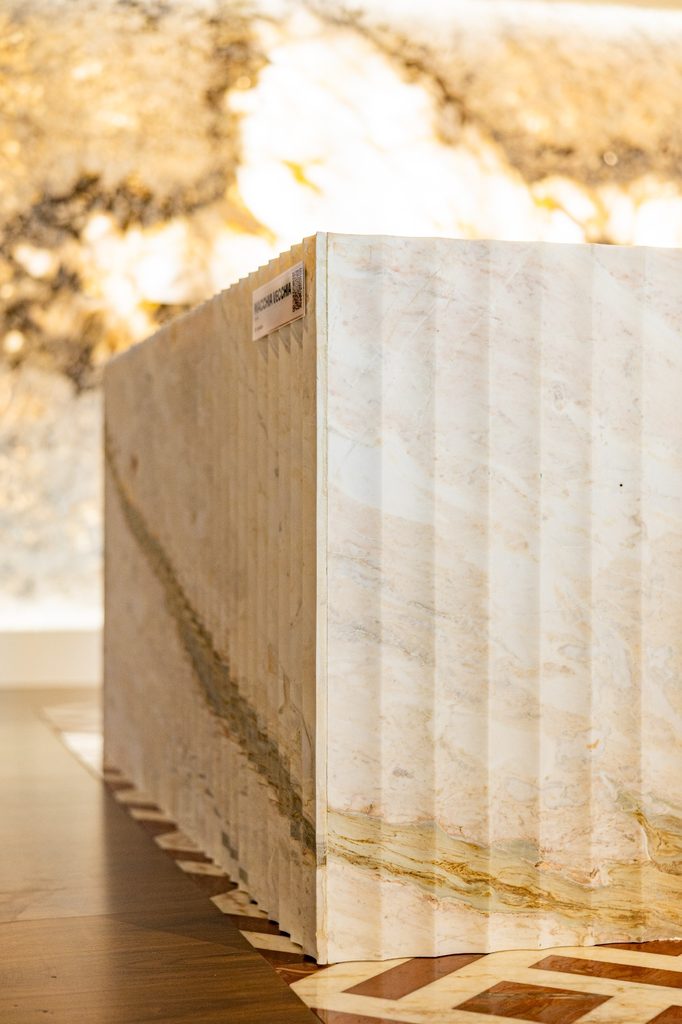
The result can have a monolithic appearance, even when made up of different components. This approach makes it possible to explore the presence and thickness of stone without necessarily relying on a solid block.
For design projects, this opens up possibilities for managing weight, optimizing material usage, transportation, and assembly, while also allowing for different design languages.
Natural Stone Tables: When the Tabletop Takes Center Stage
The tables showcased at the pavilion demonstrated different compositional strategies.
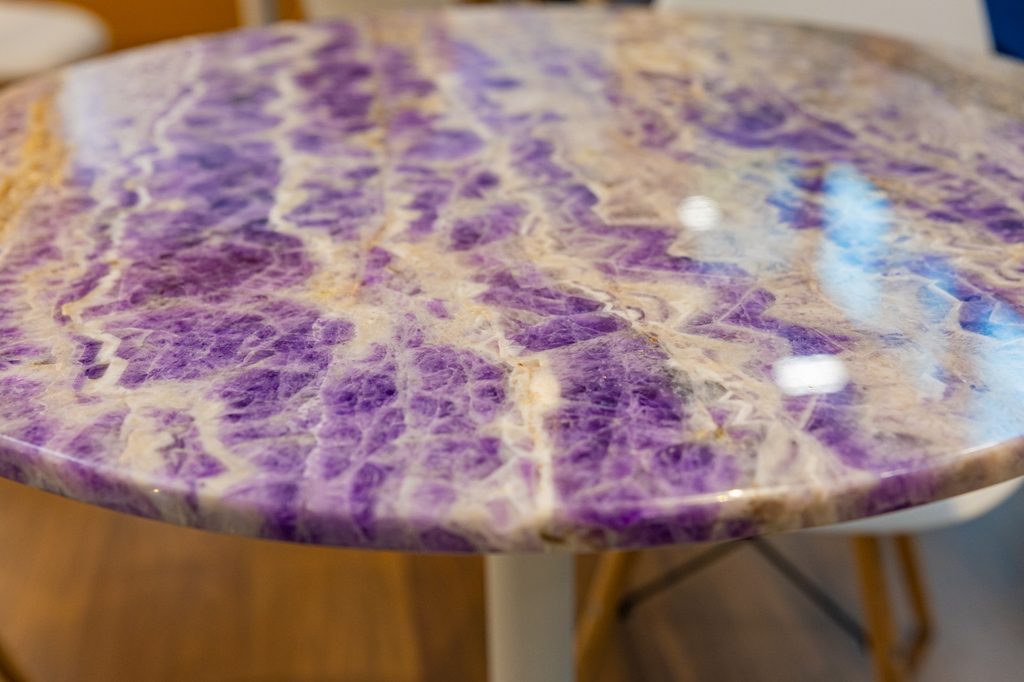
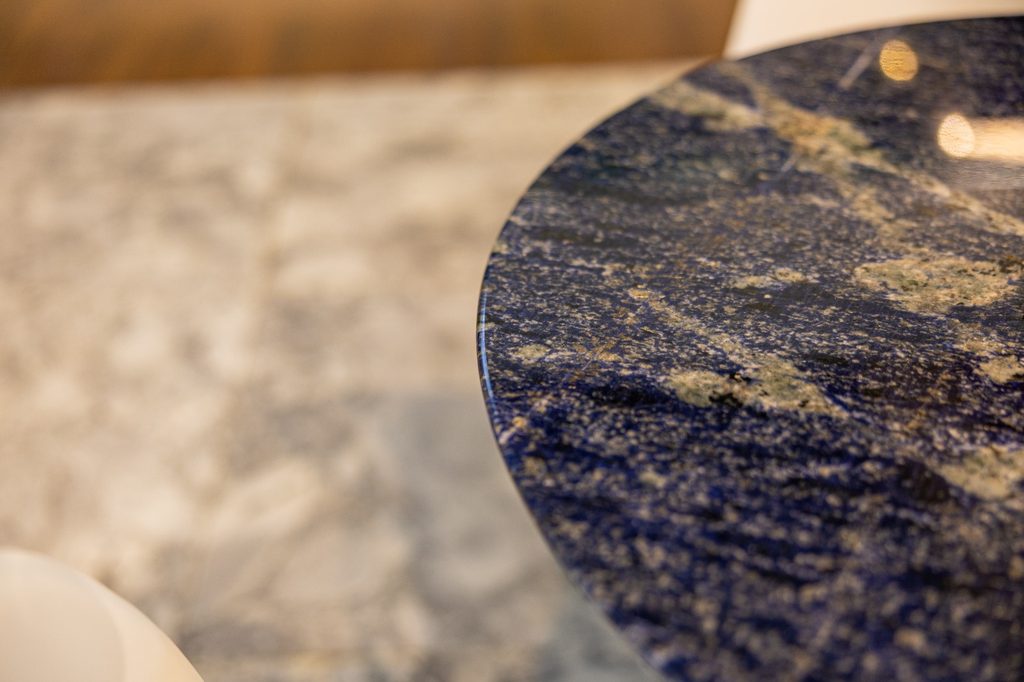
In some pieces, the base is understated, allowing the tabletop to take center stage. This is the case with the tables in intense shades of violet and blue, where veining, patterns, and color variations function almost like artwork across the surface.
In others, the tabletop and structure are made from the same stone. The continuity of color and pattern creates a more sculptural aesthetic, making the furniture appear to emerge from a single material.
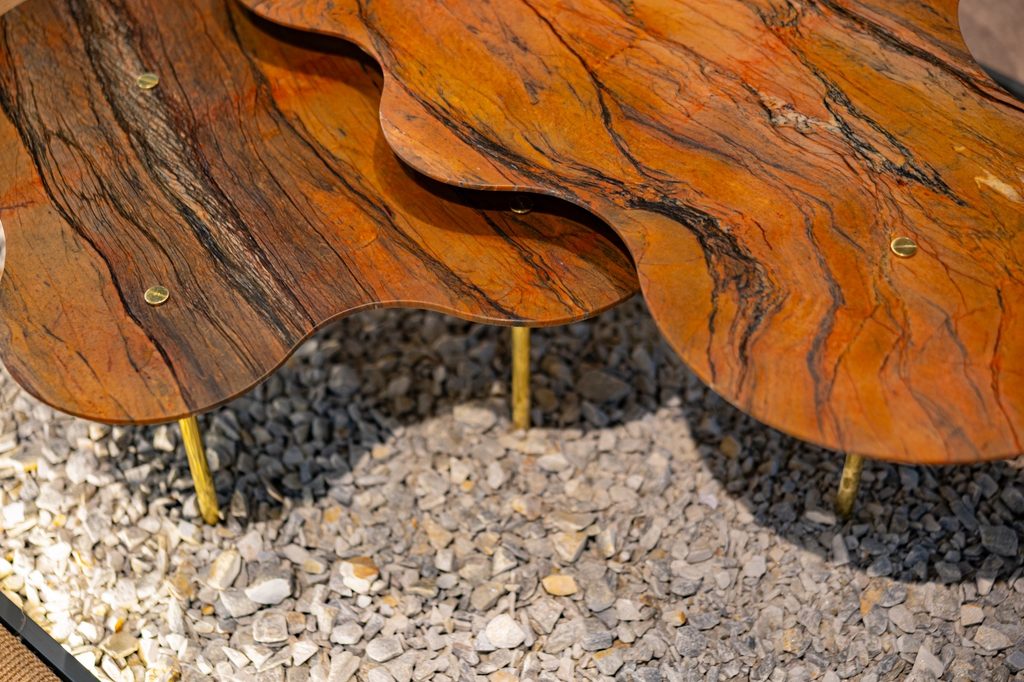
Organic shapes, sculpted bases, and combinations with metal structures were also featured. These solutions demonstrate that stone furniture can embrace both a minimalist, monolithic aesthetic and a lighter design language that combines stone with other materials.
Seating: Exploring Curves, Geometry, and Texture
Armchairs, chairs, and stools highlighted another potential of stone: the ability to shape ergonomics and form through machining techniques.
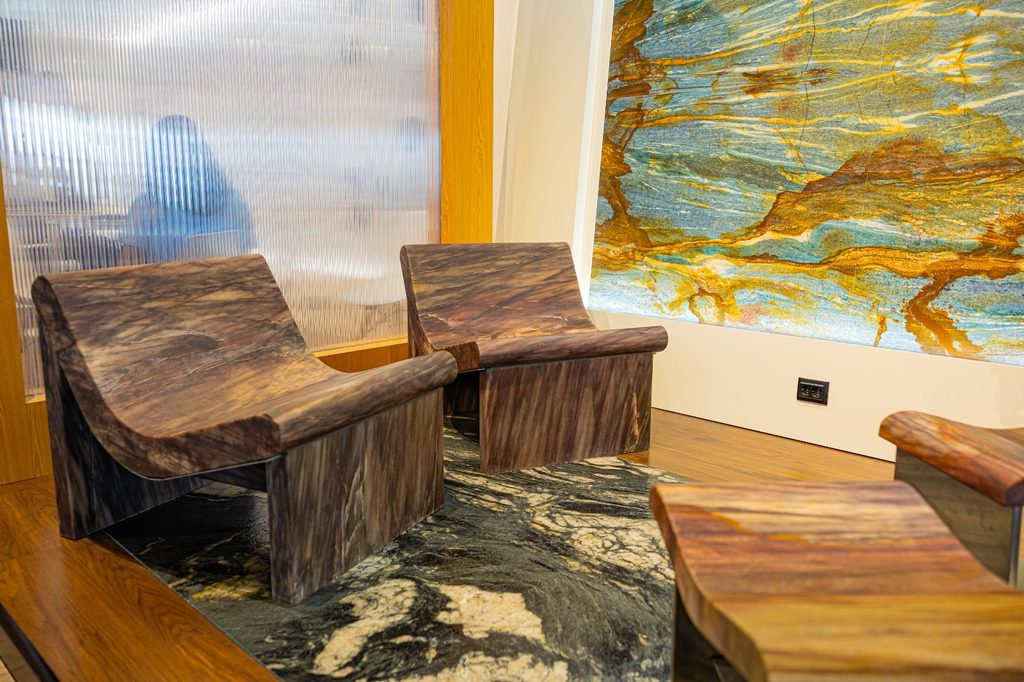
Continuous curves in seats and backrests, rounded edges, and joints between different components demonstrate how design can follow the contours of the human body while enhancing the natural flow of the stone's veining.
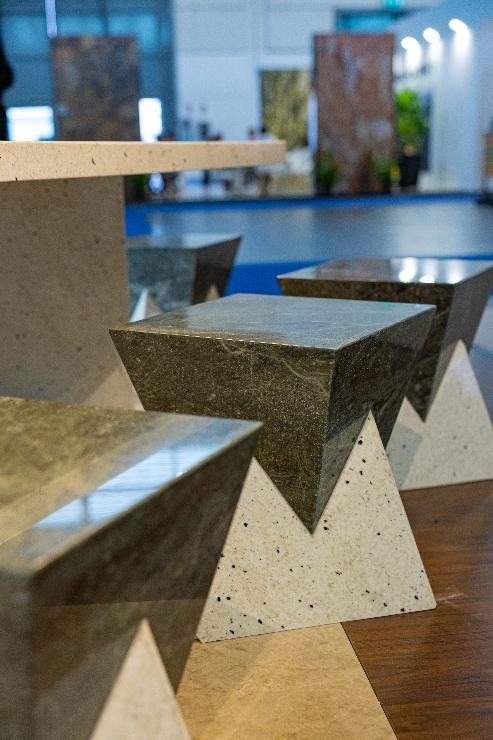
In some pieces, the contrast between different types of stone also became an integral part of the design. Light and dark tones, smooth surfaces, and more dynamic patterns resulted in furniture pieces in which the stone itself defines the visual identity.
This type of application requires special attention to detailing, particularly regarding thickness, support points, edges, and the direction of the veining.
Veining, Finishes, and Edges Are Part of the Design
When stone becomes part of the furniture, characteristics that might otherwise seem secondary take center stage.
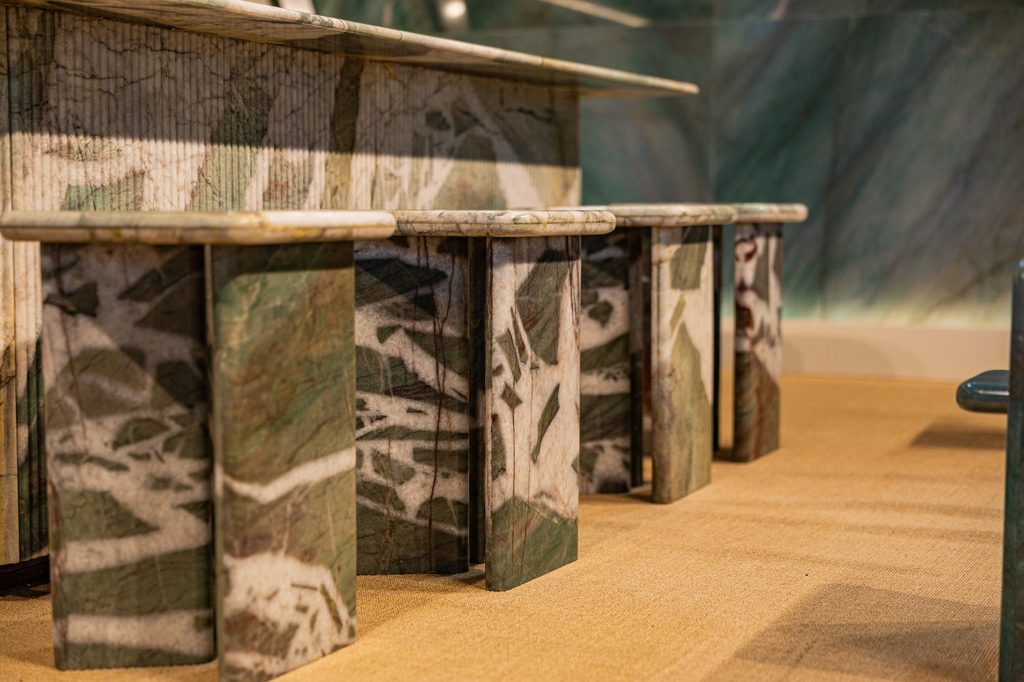
The direction of the veining, slab selection, finish, and edge design directly influence how a piece is perceived. In curved furniture, for example, the orientation of the natural pattern can enhance the flow of the form. For tabletops, slab selection can determine the entire visual composition.
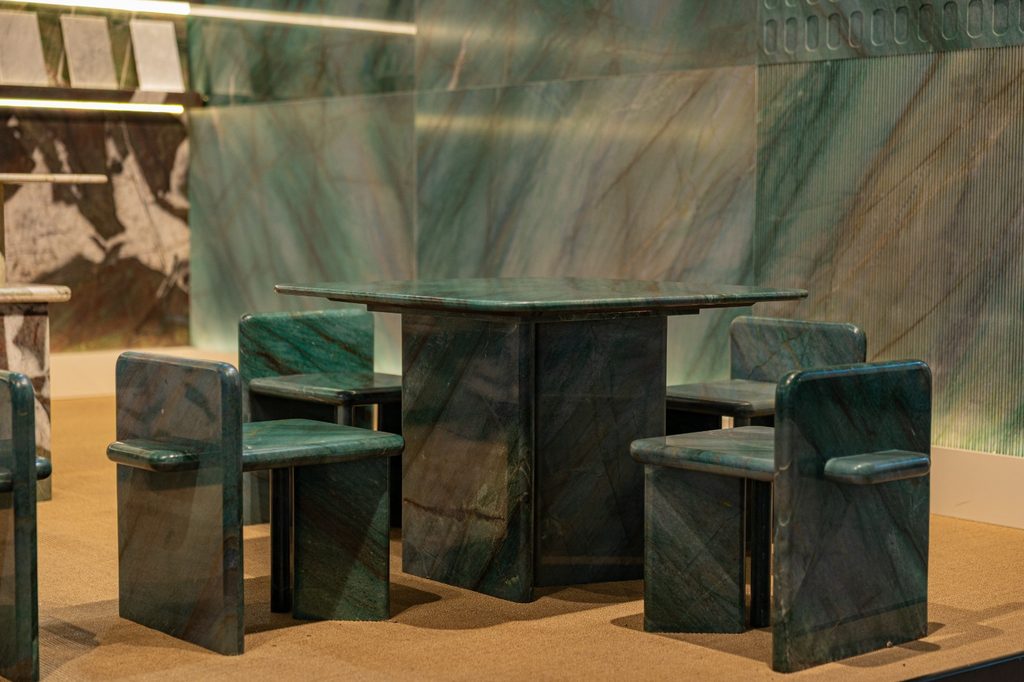
Finishes also transform the experience of the material. Polished surfaces enhance color, depth, and reflection, while less glossy or textured finishes highlight texture and volume.
For this reason, specifying natural stone goes beyond simply choosing the material. It is important to define how it will be cut, machined, finished, and positioned on each face of the furniture piece.
What to Consider When Specifying Natural Stone Furniture
Turning an idea into a buildable piece requires several decisions to be made during the design phase:
- Weight and Structure: Assess the load and support points, especially for larger or thicker pieces.
- Transportation and Assembly: Check dimensions, access routes, and whether the piece can be divided into components.
- Machining: Define cuts, curves, joints, thicknesses, and edges in advance.
- Finishes: Specify the surface treatment according to the desired effect and intended use.
- Slab Selection: Whenever possible, evaluate the material before production, taking into account natural variations in color and pattern.
- Maintenance: Consider the type of stone, finish, and intended use of the piece to determine the necessary care requirements.
A New Design Vocabulary for Specification
The applications showcased at Marmomac Italy 2026 demonstrate that natural stone furniture can be conceived as part of the architecture itself, rather than merely as a complementary element.
Tables, seating, and decorative objects transform stone into three-dimensional forms, bringing its natural characteristics — color, veining, texture, and movement — into everyday spaces.
For architects and designers, this approach expands the possibilities for material specification and allows Brazilian natural stones to be explored at different scales, from cladding to furniture and architectural details.