
Natural Stones and Sustainability - Marble, Quartzite, and Granite
When it comes to choosing materials for the construction and decoration of spaces, it is essential to consider sustainability.

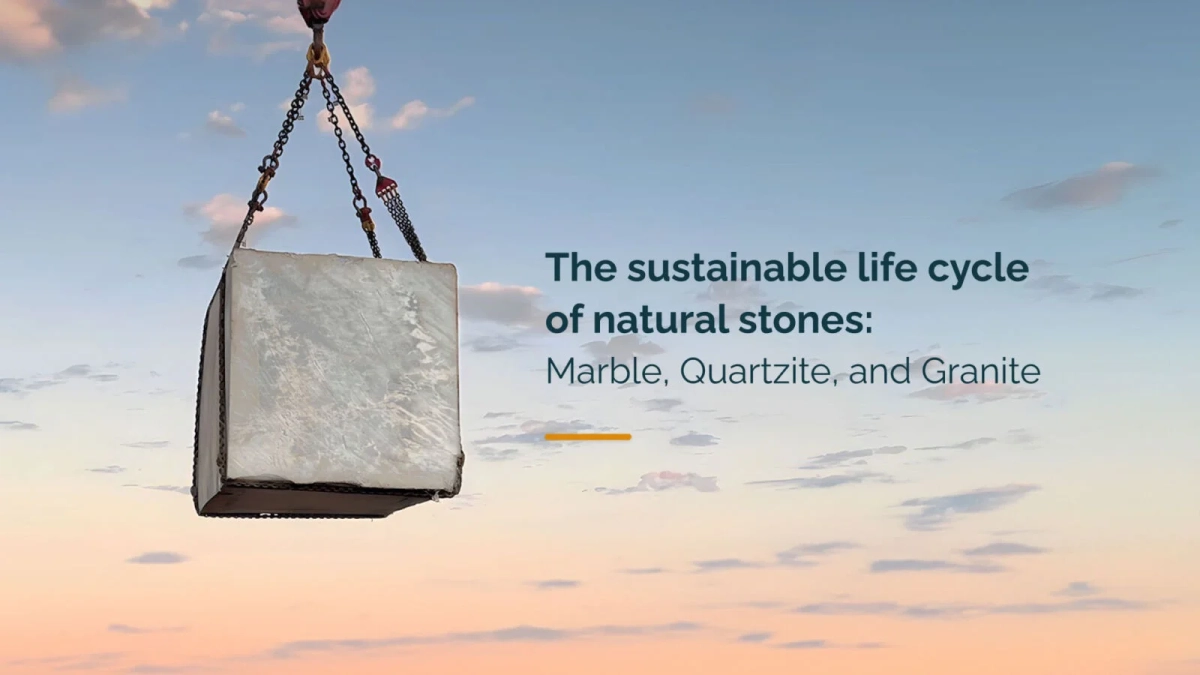
Sustainable life cycle
The first step in the life cycle of natural stones is responsible extraction. Quarries that extract marble, quartzite, and granite are increasingly adopting sustainable practices to minimize environmental impact. Furthermore, many quarries are implementing reforestation techniques to help preserve local biodiversity.
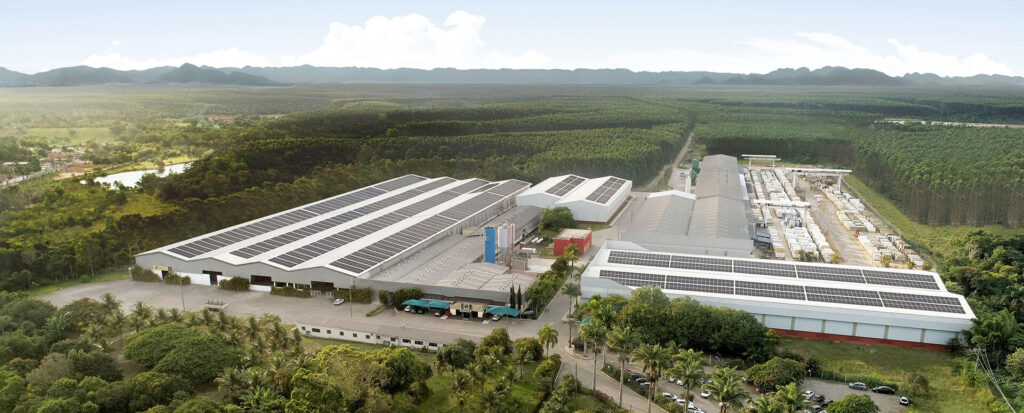
Zucchi establishes partnerships with companies that share the same environmental concerns. Vermont, one of our longstanding partners, adopts various sustainable practices, notably through the use of green energy. With a total of three active solar plants, it fulfills 80% of the energy consumption, generating an impressive 64,000 kW of green energy. This initiative not only significantly reduces CO² emissions but also contributes to the preservation of 157,000 trees per plant.
Furthermore, Vermont is mindful of consciously selecting the quarry capacity for each new material, ensuring that the financial impact does not overshadow the environmental impact. In all of its quarries, practices for water treatment and reuse are implemented for consumption, along with the retention of rainwater for use in daily processes such as cutting and quarry irrigation, aiming to reduce dust generated by transport machinery.
We also highlight the water reuse initiative from the cutting process, which undergoes a solid waste decantation process and is reused for subsequent cuts. At Zucchi, we reaffirm our commitment to sustainability, ensuring that our partnerships and operations are aligned with environmental preservation and the promotion of eco-efficient practices.
After extraction, natural stones undergo a processing stage to achieve the desired shape and finish. During this stage, it is important to adopt efficient practices to minimize material waste. Many preservation actions are taken by Zucchi, such as the treatment and reuse of water throughout the production process, the use of solar energy to reduce the consumption of energy from non-renewable sources, and a natural reserve to help offset greenhouse gas emissions. Zucchi Luxury Stones takes these and other initiatives, such as selective waste collection and sustainable landfill practices, following all environmental regulation criteria.
In this regard, the Natural Stone Institute has published a set of Environmental Product Declarations (EPDs) for the entire industry, and the results released make it clear how choosing natural stones can help reduce the embedded carbon in construction projects. Some of the reasons cited include the number of processes involved in the production of each material, which is significantly higher in the case of synthetic materials.
Check out the CO² emissions comparison in the image below.
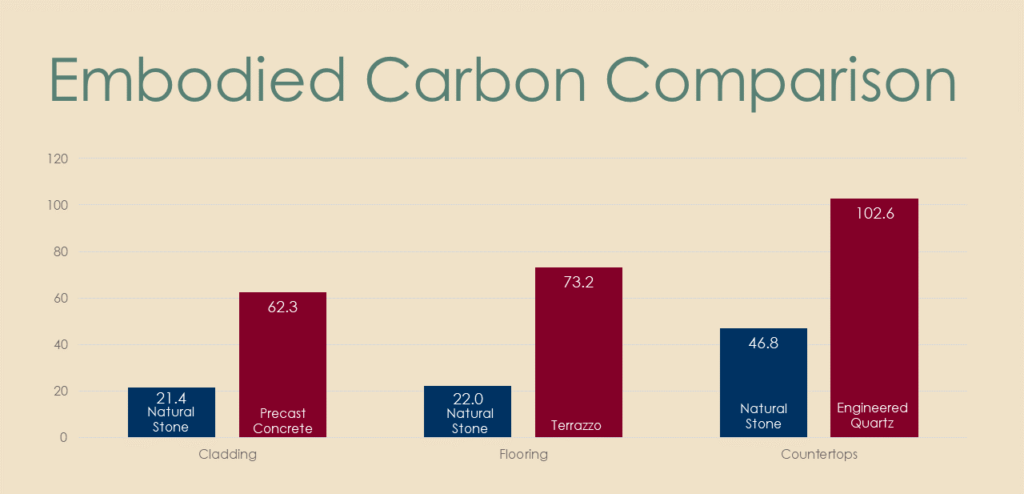
Functional Unit: 1m2 | Scope: Raw Material Extraction, Transportation, Manufacturing (A1-A3)
Natural Stone: Industry-Wide EPDs for Cladding, Flooring & Countertops
Pre-Cast Concrete Cladding: Industry-Wide EPD for Architectural Precast Panels, 150 lbs per ft3, 4” thick
Engineered Quartz: Average of three individual manufacturer EPDs including Corian Quartz, Vicostone, and Lotte
Terrazzo: Average of three individual manufacturer EPDs including Compac, Sensitile, and Sherwin Williams
Content produced by
 ZUcchi
Visit the website →
ZUcchi
Visit the website →